Cherry XTRFY MX 8.2 Pro TMR Wireless
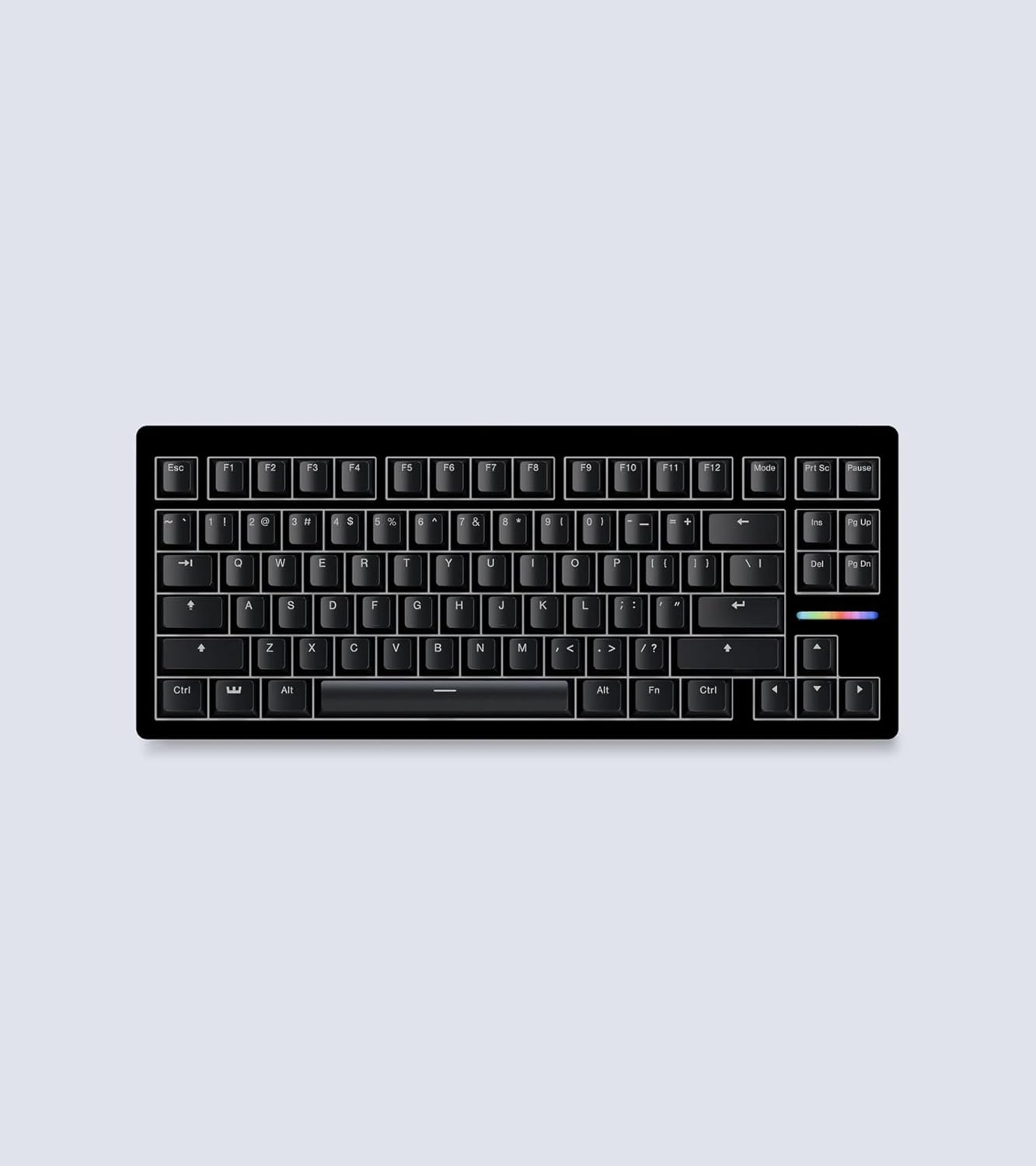
The first keyboard with hot-swap sockets that accept both Cherry MX mechanical and MK magnetic TMR switches — a true A/B platform for enthusiasts.
Price may vary. As an affiliate, we earn from qualifying purchases.
What we like
- Only keyboard on the market that hot-swaps mechanical AND magnetic switches in the same socket
- TMR sensor reads with 0.01mm precision — finer than most Hall effect competitors
- 8000Hz polling over USB-C and 2.4GHz wireless
- Triple connectivity: USB-C, 2.4GHz, Bluetooth
- Massive 8000mAh battery — ~300 hours with RGB off
Could be better
- MagCrate software is functional but rough around the edges
- $249 is a lot if you only ever plan to use one switch type
- TKL only — no full-size or 75% option at launch
Full Review
Cherry has been making mechanical switches for 40 years, and the MX 8.2 Pro TMR Wireless is the company’s loudest answer yet to the magnetic switch wave from Wooting, Keychron, and SteelSeries. The trick: instead of picking a side, Cherry built a socket that accepts both. Drop in MX Reds for typing, swap to MK TMR magnetics for gaming, and use the same board for both.
The Hot-Swap Trick Actually Works
Every other “magnetic” keyboard on the market locks you into one switch family. The MX 8.2 Pro’s sockets read both Cherry’s traditional MX mechanical switches and the new MK TMR (tunneling magnetoresistance) magnetic switches without any adapter or daughterboard swap. The board detects what you’ve installed and reconfigures the firmware accordingly. It’s genuinely novel — and for keyboard enthusiasts who have been wanting to A/B mechanical feel against analog actuation without buying two $200 keyboards, this is the first real option.
TMR vs Hall Effect
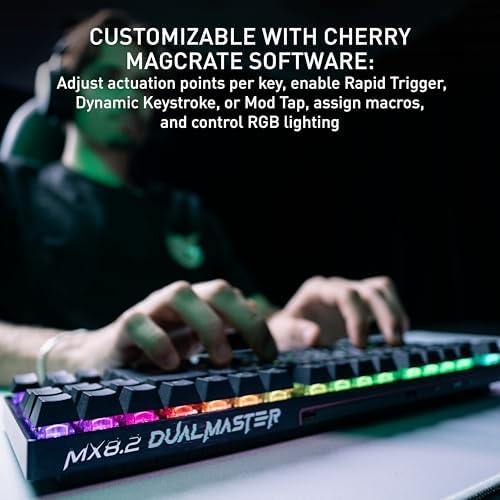
Cherry went with tunneling magnetoresistance instead of the Hall effect sensors most magnetic keyboards use. The practical upshot is 0.01mm precision per key — finer than Wooting’s or Keychron’s published specs. In MagCrate, you can set actuation between 0.1mm and 4.0mm, configure Rapid Trigger, layer Dynamic Keystroke for double-action keys, and enable SnapKey. All the modern analog tricks are here, and the resolution gives you headroom for tiny adjustments that other boards round off.
Wireless That Doesn’t Compromise
Most 8000Hz keyboards are wired-only. The MX 8.2 Pro hits 8kHz over its 2.4GHz dongle too, which is rare. The 8000mAh battery lasts roughly 300 hours with RGB off and around four days of heavy use with lighting cranked. Bluetooth is there for laptop work but caps at standard polling — fine for typing, not for competitive play.
Software Is the Weak Link
MagCrate does everything it needs to, but it feels like a 1.0 product. Layouts save reliably, per-key config works, but the UI is cluttered and onboarding is poor. If you’ve used Wootility, you’ll notice the gap. Cherry has time to fix it, and the keyboard itself doesn’t suffer for it once you’re configured.
Who Should Buy This
Buy the MX 8.2 Pro TMR if you genuinely want to experiment with both mechanical and magnetic switches on one board — that’s the unique value proposition, and nothing else delivers it. If you’re a magnetic purist who only cares about analog gaming performance, the Wooting 80HE is more polished and the Wootility software is in another league. If you want a Keychron-style magnetic board at a friendlier price, the Lemokey P1 HE gets you most of the way for less money. The Cherry is for the enthusiast who wants both worlds in one socket.