Loftie Smart Lamp
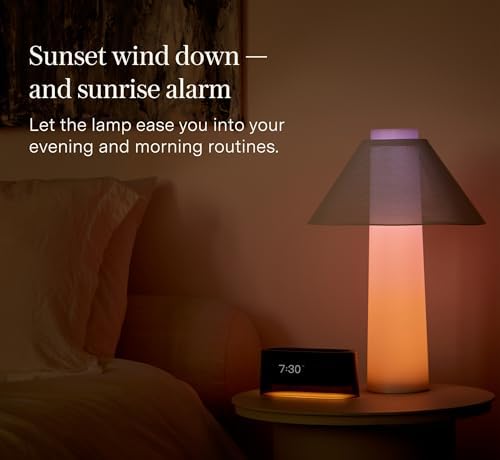
A sunrise/sunset wake-up lamp designed with sleep doctors — simple physical buttons, no subscription, and a warm-to-red wind-down cycle that doubles as an end-of-workday signal.
Price may vary. As an affiliate, we earn from qualifying purchases.
What we like
- Programmable sunrise and sunset cycles that actually shift you toward sleep
- Large physical buttons mean you rarely need to open the app
- Warm-to-red color cycle is genuinely melatonin-friendly, not just dim white
- No subscription required — every feature works out of the box
Could be better
- $175 is steep for what is, structurally, a single-bulb lamp
- App is required for initial setup and schedule changes
- Only one colorway (white) — won't suit every desk aesthetic
Full Review
Most “smart lamps” are RGB party tricks wrapped in a bad app. The Loftie Smart Lamp is the opposite — a narrowly focused circadian tool that happens to look at home on a desk corner. It runs a programmed light cycle that starts warm and dims through amber into deep red, which is the part most wake-up lights skip.
Build and Hardware
The lamp is a chunky white cylinder with a soft diffuser and a recessed cluster of physical buttons on top. The buttons are oversized on purpose — you can hit them in the dark without looking, which matters more than you’d think after a week of use. Construction is plastic but dense and matte, not the glossy cheap kind. The bundled 5V adapter is fine; the cord is a touch short at around five feet.
The Light Cycle Is the Whole Point
You program two routines: a sunrise and a sunset. Sunrise ramps from deep red through amber to a usable warm white over 15-30 minutes. Sunset does the reverse and is the one I actually use at a desk — set it to fire at 6pm and it becomes a built-in “stop working” alarm. The red phase is genuinely red, not “warm white pretending,” which means it won’t suppress melatonin if you’re winding down. There’s also a manual reading mode and ambient settings if you just want a lamp.
App and Daily Use
The Loftie app is required for initial Wi-Fi setup and for editing schedules, but day-to-day you barely touch it. There’s no subscription, no upsell, no account funnel — refreshing after the Hatch experience. Once your routines are set, the physical buttons handle on/off, brightness, and skipping into the next mode.
Loftie vs. Hatch Restore Plus
If you want guided meditations, a sound library, and a deep app ecosystem, the Hatch Restore Plus does more — but it gates the good stuff behind Hatch+ at around $50/year. The Loftie is the simplicity pick: fewer features, no subscription, better physical controls, and a more convincing red-light wind-down. If your goal is “lamp that helps me stop staring at screens at night,” Loftie wins. If you want a full bedside wellness device, Hatch wins.
Who Should Buy This
Buy the Loftie Smart Lamp if you want a sunrise/sunset light that just works, hate subscription apps, and value a real physical interface over a screen. It’s especially good as a desk-corner “end-of-workday” signal for anyone working from home who struggles to log off. Skip it if you need built-in audio, multiple alarm profiles, or a cheaper light cycle — a $40 Philips Hue bulb on a routine will get you 70% of the way for a fraction of the price, just without the red phase or the buttons.